
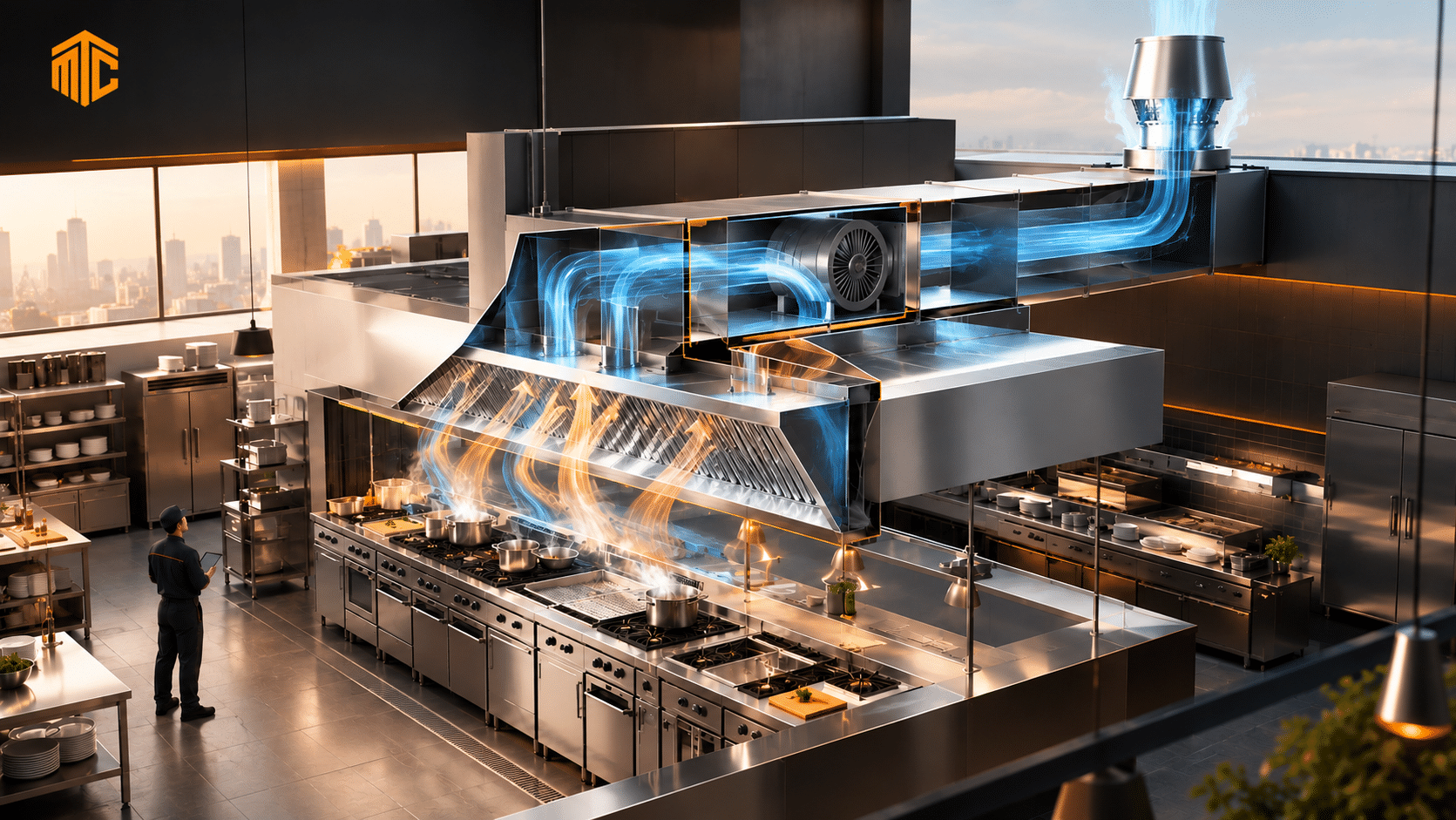
Grease buildup in dirty exhaust systems causes about 22% of all restaurant fires, according to NFPA data. That single fact tells a big story. A kitchen exhaust system that looks fine on the outside can hide serious risk inside. In Saudi Arabia’s busy food industry, from Riyadh to Jeddah, commercial kitchens run long hours every day. Heat, oil, and smoke build up fast. If ventilation upkeep gets skipped, a small clog can turn into a major breakdown. This guide explains why kitchen ventilation maintenance matters, what warning signs to watch for, and how regular care saves money.
Kitchen ventilation maintenance means the regular care and servicing of a kitchen’s exhaust system, including hoods, ducts, fans, and filters. This system pulls smoke, heat, grease vapor, and odors out of the cooking area, keeping the air clean and safe to breathe. Maintenance covers cleaning, inspection, and repair work that keeps every part functioning as designed. Without it, grease and dust settle inside the system, airflow weakens, and fire risk climbs. In short, it’s the upkeep that keeps a kitchen’s “lungs” working properly every single day.
Types of Kitchen Ventilation Maintenance
Kitchen ventilation maintenance isn’t a single task. It covers several types of work, each targeting a different part of the system. Hood cleaning removes grease film from surfaces above cooking lines. Duct cleaning clears buildup deep inside airflow channels, where fires often start. Filter servicing involves washing or replacing grease traps that catch particles before they reach ductwork. Fan and motor maintenance checks belts, bearings, and electrical parts for wear. Lastly, full system inspections review airflow speed, code compliance, and fire suppression readiness, giving owners a complete safety picture.
Why Kitchen Ventilation Maintenance Matters in Saudi Commercial Kitchens
Saudi Arabia’s climate is hot and dusty most of the year. This puts extra load on exhaust fans and hood systems. Dust mixes with kitchen grease and forms a thick, sticky layer inside ducts. Over time, this layer blocks airflow and forces the whole system to work harder. A strained system uses more energy and wears out faster. Restaurants, hotels, and catering kitchens across the Kingdom depend on steady airflow to keep staff safe and food quality high. Skipping maintenance puts all of that at risk.
Common Signs Your Exhaust System Needs Attention
Most ventilation failures don’t happen overnight. They start small and grow quietly. Kitchen staff often notice warning signs but ignore them because the kitchen still “works.” Catching these signs early is the easiest way to avoid a costly breakdown later. Here are signs that should never be ignored:
- Slower airflow or weak suction above cooking stations
- Unusual burning or musty smells coming from the hood
- Grease dripping or visible residue on walls near the vent
- Loud rattling, humming, or grinding noise from the fan motor
- Smoke lingering in the kitchen instead of clearing quickly
- Rising kitchen temperature even with the exhaust running
How Small Problems Turn Into Expensive Repairs
A loose belt or a clogged filter seems minor at first. But a struggling exhaust fan runs hotter and pulls more current, which shortens motor life. Grease that isn’t cleared keeps building layer after layer, until the duct itself needs replacement instead of a simple wash. What starts as a small fix, done early, could cost a fraction of what a full system overhaul demands months later. Neglect doesn’t stay small. It compounds, just like unpaid debt, until the bill becomes unavoidable.
The Real Cost of Ignoring Hood Cleaning
Many kitchen owners see maintenance as an extra expense rather than an investment. This mindset backfires quickly. A blocked exhaust system forces kitchens to shut cooking lines during peak hours, cutting daily revenue. Grease fires can damage equipment, walls, and inventory, sometimes forcing a full closure for repairs. Insurance claims may even get denied if inspection records show neglected upkeep. Compare that against a routine service fee, and the math is clear: prevention is always cheaper than recovery.
Best Practices for Kitchen Ventilation Maintenance
A simple maintenance routine protects both safety and budget. Saudi commercial kitchens that follow a fixed schedule report fewer breakdowns and lower repair bills. The goal isn’t complicated: consistency matters more than perfection. Below are practical habits every kitchen manager should build into daily and monthly routines:
- Wipe down hood surfaces and filters daily after closing
- Schedule professional duct cleaning every three to six months
- Check fan belts and motors monthly for wear or looseness
- Keep a written maintenance log for inspection and insurance records
- Replace grease filters as soon as they show heavy buildup
- Test airflow speed regularly using a simple anemometer check
Daily Cleaning Habits
Daily wipe-downs of hood surfaces and filters prevent grease from hardening into a stubborn, fire-prone layer. Staff should clean these areas right after closing, while residue is still soft and easy to remove. This small habit takes minutes but significantly reduces buildup, keeps kitchens compliant with hygiene standards, and protects equipment from premature wear caused by neglected grease accumulation.
Scheduled Professional Servicing
Even with diligent daily care, ducts need deeper attention from trained technicians every three to six months. Professional cleaning removes grease trapped deep within ductwork that regular wiping can’t reach. This scheduled servicing also covers checking fan belts and motors monthly, catching early signs of wear before they cause costly breakdowns or unexpected system failures during peak service hours.
Monitoring and Record-Keeping
Tracking system performance closes the loop on maintenance efforts. Keeping a written log documents every inspection, repair, and filter change, which proves invaluable during insurance reviews or safety audits. Pair this with regular airflow tests using a simple anemometer to confirm the ventilation system is working efficiently, helping managers catch declining performance before it becomes a safety hazard.
How Often Should Kitchens Schedule Servicing
Service frequency depends on how much a kitchen cooks, not just how it looks. A high-volume fast-food kitchen frying all day needs cleaning far more often than a small café serving light meals. Most fire codes and HVAC experts recommend quarterly cleaning for heavy-use kitchens, and twice yearly for lighter operations. Saudi kitchens running during Ramadan or tourist season often see cooking volume spike, which means schedules should flex around demand rather than stay fixed all year.
Choosing the Right HVAC Contractor in Saudi Arabia
Not every technician understands commercial kitchen ventilation the same way. Residential HVAC skills don’t always translate to grease-heavy, high-heat kitchen systems. A qualified and certified HVAC contractor should know local fire codes, understand Saudi climate challenges, and carry proper certification for hood and duct servicing. Ask about their inspection process, response time, and whether they document each visit. A trustworthy provider treats your kitchen system as an ongoing relationship, not a one-time job.
Book Reliable Kitchen Ventilation Service with MTC
Don’t wait for a small issue to become a costly shutdown. MTC offers professional HVAC and kitchen ventilation maintenance built for the demands of Saudi Arabia’s commercial kitchens. From routine hood cleaning to full exhaust system inspections, our certified technicians keep your kitchen safe, compliant, and running smoothly all year. Get ahead of expensive repairs — reach out to MTC today and schedule a maintenance visit that protects your business, your staff, and your bottom line.
Frequently Asked Questions
How often should commercial kitchen exhaust systems be cleaned?
Heavy-use kitchens should be cleaned every three months. Lighter kitchens can manage with twice-yearly service.
Can a dirty exhaust system really cause a fire?
Yes. Grease buildup is highly flammable and a leading cause of kitchen fires when systems go uncleaned.
Does ventilation maintenance affect energy bills?
Yes. A clogged system forces fans to work harder, raising power consumption and utility costs.
What’s the first sign of a failing exhaust fan?
Unusual noise or weak airflow above cooking stations is usually the earliest warning sign.