
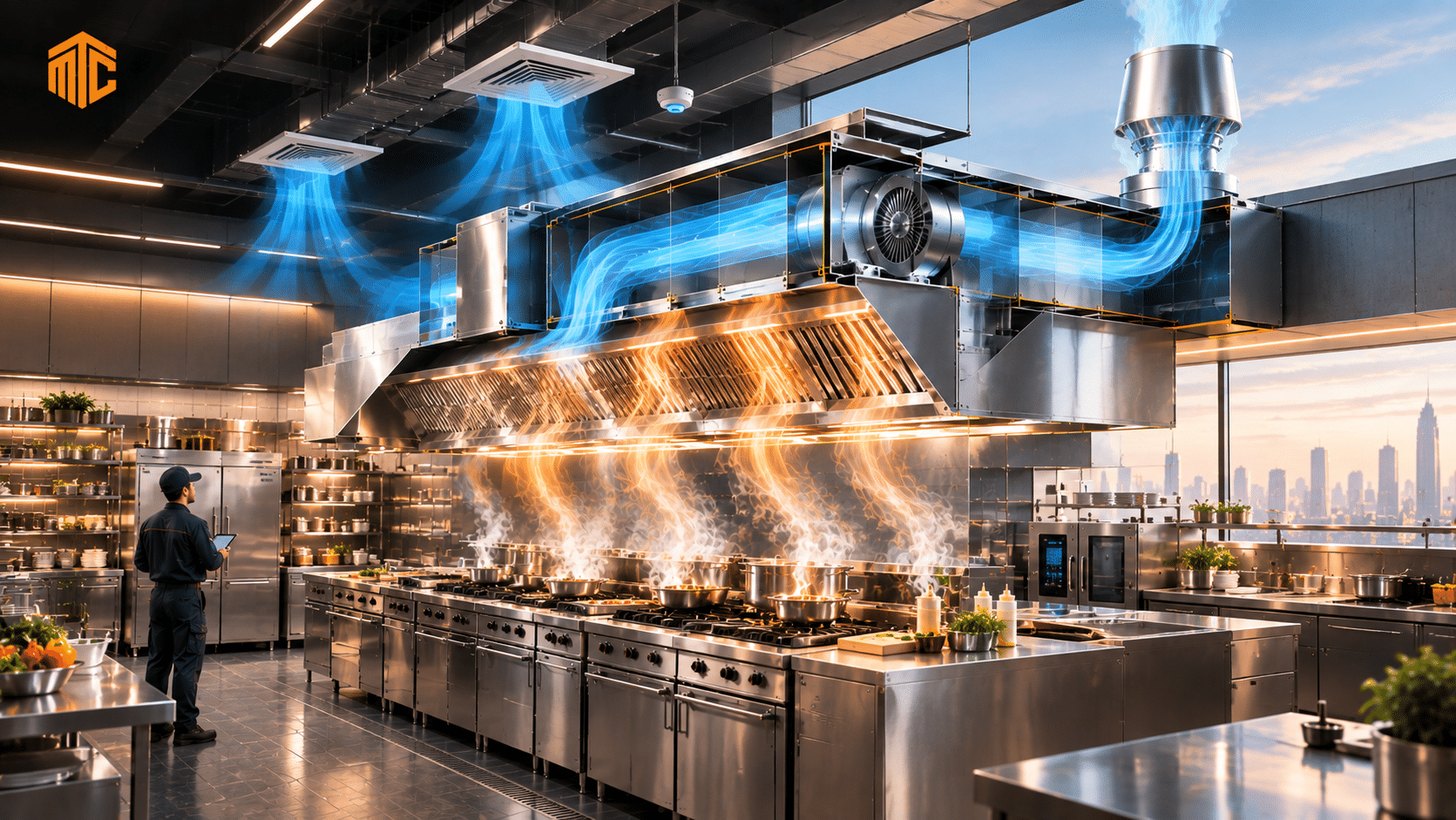
Commercial kitchens use up to five times more energy per square foot than a typical office space, largely due to constant heat and exhaust demands. That number shows just how hard a kitchen’s ventilation system works every single day. If your team keeps battling smoke that won’t clear, heat that won’t drop, or odors that linger long after closing, your system is trying to tell you something. In Saudi Arabia’s hot climate, these signs multiply fast. This blog breaks down why it happens, what it costs, and how to fix it before it disrupts your business.
Why Smoke, Heat, and Odors Keep Coming Back
A kitchen isn’t supposed to feel like a sauna filled with smoke. When exhaust systems weaken, they stop clearing fumes and heat at the rate cooking produces them. Grease-clogged filters, tired fan motors, and blocked ducts all slow airflow down. The result is a kitchen that traps what it should be releasing. Instead of a one-time glitch, this becomes a daily struggle that wears on staff comfort, food quality, and equipment life.
The Hidden Link Between Heat and Staff Performance
Chefs and line cooks already work near open flames and hot equipment. Add poor ventilation, and indoor temperatures climb even higher. Staff fatigue rises, focus drops, and mistakes become more common during busy service hours. In Gulf countries where outdoor heat is already intense, an overheated kitchen adds a second layer of stress on top. Cooler, cleaner air isn’t a luxury here — it’s a basic requirement for safe, productive kitchen operations.
What Causes Ventilation Systems to Underperform
Several factors quietly reduce a system’s power over time. Dust from Saudi Arabia’s outdoor environment mixes with kitchen grease and thickens inside ducts. Aging fan belts stretch and slip, cutting suction strength. Filters clog faster in high-volume kitchens that fry or grill often. Even something as simple as a blocked outside vent cap can choke airflow. None of these issues fix themselves — each one needs direct attention to restore full performance.
Kitchens rarely lose airflow overnight. The decline is usually gradual, which makes it easy to miss until it becomes obvious. Staff often adjust their habits around the problem instead of reporting it. Watching for these signals early helps avoid bigger disruptions later:
- Smoke hanging near the ceiling instead of pulling out fast
- Strong cooking odors reaching dining areas or nearby offices
- Noticeably warmer kitchen air compared to previous months
- Fogged-up windows or condensation near the cooking line
- Fan running constantly but airflow feels weak
- Increased complaints from staff about breathing comfort
How Odor Buildup Affects Customer Experience
Smoke and heat are staff concerns, but odor problems reach further. Lingering cooking smells can drift into dining rooms, hallways, or even neighboring shops in shared buildings. Customers notice quickly, and stale kitchen odor can shape their impression of cleanliness, even if food quality is excellent. In competitive Saudi food markets, first impressions matter. A ventilation system that controls odor properly protects both reputation and repeat business.
Odor and Online Reviews
Bad smells often show up in customer reviews before food complaints do. A single mention of “smelly restaurant” on Google or social media can turn away dozens of potential diners. Unlike taste, which is subjective, odor is instantly noticeable and hard to defend. Fixing ventilation issues early protects star ratings and prevents small complaints from spreading into public feedback that’s difficult to remove later.
Shared Buildings and Neighbor Complaints
Many Saudi restaurants operate inside malls, hotels, or mixed-use buildings. Poor exhaust performance doesn’t just affect one kitchen, it can push grease smell into nearby shops, offices, or apartments above. This often leads to complaints filed with building management or municipal authorities. Proper odor control through a working ventilation system helps avoid disputes with neighboring tenants and keeps landlord relationships smooth.
Odor as an Early Warning Sign
Strong, unusual smells rarely appear without cause. A sudden change in kitchen odor, especially something sharp or burnt, often signals grease buildup, a failing filter, or blocked airflow before other symptoms show up. Training staff to notice odor changes gives kitchens an early alert system. Catching these signals early means smaller repairs, not emergency shutdowns during busy service hours.
The Cost of Letting Ventilation Issues Continue
Ignoring these warning signs rarely saves money. Fans working overtime consume more electricity, raising monthly utility bills. Overheated kitchens push HVAC and cooling systems to work harder just to balance the temperature. Staff turnover can rise when working conditions stay uncomfortable for too long. Add potential health code violations from odor or air quality complaints, and the financial impact stretches well beyond the kitchen itself.
Practical Steps to Restore Proper Airflow
Fixing ventilation problems doesn’t always require a full system replacement. Often, a structured maintenance approach solves most issues quickly and affordably. The key is consistency, not one-time fixes. These steps help kitchens regain control over smoke, heat, and odor:
- Schedule deep duct and hood cleaning every few months
- Replace grease filters before they become fully clogged
- Inspect fan motors and belts for wear on a monthly basis
- Check exterior vent caps for blockages from dust or debris
- Balance make-up air systems so exhaust works efficiently
- Keep a maintenance calendar to track service history
Saudi Kitchens Need Climate-Specific Ventilation Solutions
Standard ventilation advice doesn’t always fit Saudi Arabia’s environment. Commercial kitchen ventilation removes heat, smoke, and grease-laden air from cooking areas to keep staff safe, food quality high, and fire risk low. High outdoor temperatures, dust storms, and long operating hours during Ramadan or peak tourist seasons create unique pressure on kitchen systems. A ventilation plan built for milder climates often falls short here. Local expertise matters because technicians familiar with Gulf conditions know how to adjust cleaning frequency, filter type, and airflow balance to match real demand, not generic assumptions.
Why Hire a Professional HVAC Contractor for Kitchen Ventilation
Kitchen exhaust design isn’t guesswork; it’s applied engineering. Contractors deploy experienced HVAC engineers on projects. They must calculate CFM against hood size, duct diameter, and make-up air balance to maintain proper negative pressure without starving burners of oxygen. Duct velocity needs to stay within the NFPA 96 range, typically 1,500–1,800 FPM, to stop grease from settling and igniting inside ductwork. Get the static pressure wrong, and fans overwork, odors backflow, and energy bills climb. MTC brings this technical precision to every Saudi kitchen it services, pairing certified engineering knowledge with local code expertise. That combination is why restaurants across the KSA trust MTC for exhaust systems built to last, not just look clean.
Get Your Kitchen Ventilation Fixed by MTC
Tired of fighting smoke, heat, and stubborn odors every shift? MTC provides expert commercial kitchen ventilation services built for Saudi Arabia’s demanding conditions. Our certified HVAC engineers and technicians inspect, clean, and restore exhaust systems so your kitchen stays cool, clear, and compliant. Don’t let a struggling system slow down your team or your service. Contact MTC today and get your kitchen ventilation running the way it should.
Frequently Asked Questions
Why does my kitchen stay hot even with the exhaust fan running?
Weak airflow from clogged filters or worn motors often means the fan can’t remove heat fast enough.
Can bad ventilation affect food safety?
Yes. Poor airflow raises kitchen temperature and humidity, both of which can speed up bacterial growth.
How fast can odor problems be fixed?
Most odor issues improve immediately after a professional deep clean and filter replacement.
Is ventilation maintenance different for Saudi kitchens?
Yes. Dust, heat, and longer operating hours require more frequent, climate-adjusted servicing.