
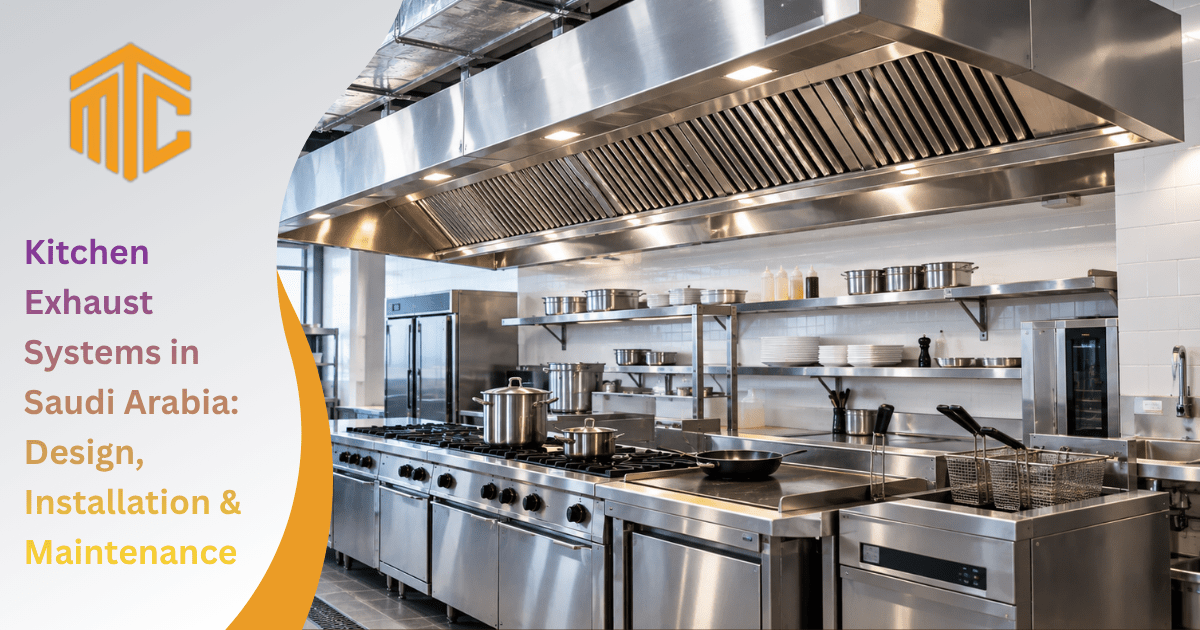
This information is for restaurant entrepreneurs in Saudi Arabia. Hotel operations teams and facility directors should know how to make a functional and compliant kitchen exhaust system that works properly in the climatic and regulatory environment. Commercial kitchens in Riyadh, Jeddah, or Dammam create an unusual amount of heat, grease, and steam that must be managed to exit. The kitchen exhaust system is what removes that load efficiently and facilitates people’s work environment while ensuring compliance with Saudi Civil Defense regulations. This article provides answers to questions about what such kitchen systems are, how they are designed, installed, and serviced.
The kitchen exhaust system is made up of fans, hoods, filtering elements, ductwork, and other devices that prevent heat, smells, fumes, and oily particles generated during cooking from spreading around the kitchen. The system can work alongside the make-up air system with incoming air, through which fresh air is supplied to the kitchen to balance the air pressure inside it. If there were no exhaust system, kitchens would be covered with grease, the smoke would hang in the air, and risky events would occur.
Why It Matters More in Saudi Arabia's Climate
The ambient temperature in Saudi Arabia is higher, which results in exhaust cooking devices as well as ventilation systems compared to other countries with temperate climates. High summer temperatures force kitchen exhaust and make-up air systems to operate at maximum efficiency to keep temperatures at a particular safe level in the kitchen. Dust and sand that penetrate the air create additional stress for filters and fans. The reason for the effect is strict enforcement of regulations that require and guarantee the proper functioning of the cooking and venting systems.
- Ambient heat above 45°C in summer increases fan load and duct heat stress
- Airborne dust shortens filter life and demands more frequent cleaning cycles
- Saudi Building Code (SBC) and Civil Defense inspections require documented compliance
- Dense commercial districts mean odor and grease discharge affect neighboring tenants
Kitchen Exhaust System Design
To have a good design of a kitchen exhaust system, one must start with the selection of the menu before thinking about the ducting. Charcoal grills produce more grease than steam kitchens. So, the type of hood must follow. Designers measure the air that has to be sucked away and use that number to determine the size of ducting used to avoid the grease settling down with the use of fast-moving air. The choice of location for fans should also not cause them to overlap with air intake systems.
There should always be a plan for a make-up air system. If the space is being ventilated without a system replacing the exhaust, then the space will fall into a vacuum and get in dirty air. An effectively designed system calculates the proper amounts of extraction and supply, and conditions of air coming in if needed. It directs its path in such a way that there is no recirculation back to the hood prematurely before cooling happens.
Core Components of Kitchen Exhaust System
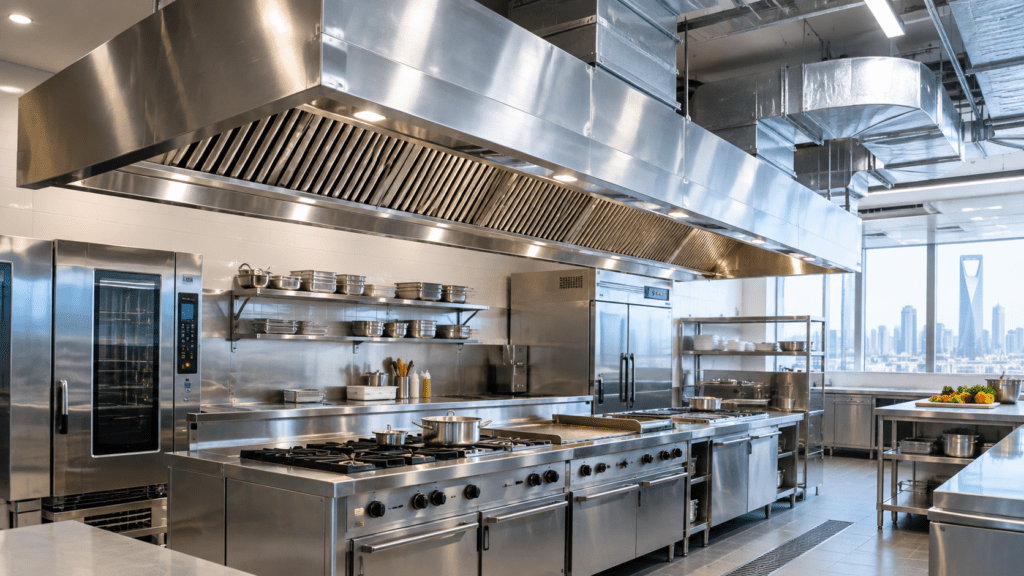
The working mechanism of an exhaust system can be understood by breaking it down into its components, from the point of collection to that of discharge. It helps both in troubleshooting and communicating with contractors involved in its design and installation.
- Canopy hood — captures smoke, heat, and grease directly above cooking equipment
- Grease filters — baffle or cartridge filters that trap grease before it enters ductwork
- Ductwork — fire-rated, sealed steel ducting sized for velocity and fire safety
- Exhaust fan — roof-mounted or inline fan that pulls contaminated air out of the building
- Make-up air unit — replaces extracted air, tempered for comfort and pressure balance
- Fire suppression system — wet chemical suppression integrated into the hood and duct run
Installation: Getting It Right the First Time
The quality of installation is essential to determine whether an efficiently designed system really works effectively. This means that the ductwork must be welded or sealed with tight liquid and fireproof joints. The ducts should be positioned at the correct angle to drain grease and not be in contact with flammable elements, according to the fire and civil defense clearance standards. The fans must have vibration insulation and the right height curb on the rooftop. Each of the transitions must be accessible for cleaning, because inaccessible ductwork makes the inspection fail most of the time.
If the system passes all the commissioning requirements on paper but has been installed improperly, the result will cost more than a correctly installed system from the very beginning. Commissioners should do airflow testing at each hood, verify capture by smoke or dye testing, and check the fire suppression operation before the operation of the system in the kitchen. They should hand over to the contractors all the as-built drawings, fan features, and data on maintenance schedules because only this information is useful to the inspectors.
Maintenance: Protecting the Investment
Grease buildup is a fire danger that is not apparent. This is the reason for the need for maintenance schedules, regardless of the appearance of the kitchen. Filters need to be cleaned either weekly or bi-weekly, depending on cooking capacity. Complete fan and duct cleaning by an expert contractor is carried out at least once every three months for restaurants having a low volume of cooking.
Maintenance is the time when the majority of avoidable malfunctions are discovered in time. A badly worn fan bearing, cracks in the seals of filters, and a bogged duct access panel are all inexpensive repairs that can be made during scheduled maintenance, but they can turn into massively costly accidents if ignored.
Common Problems and Their Root Causes
The majority of issues related to the exhaust system can be attributed to a few key issues. These include the use of smaller ducting to cut installation costs, the lack or improper balancing of make-up air, the infrequent cleaning of grease, and the installation of fans that are not matched to the static pressure of the ducting. In any case, a constant smoke presence in the kitchen, unexpected odors in the dining area, or a hot, humid kitchen with an exhaust system running should not be ignored.
Compliance With Saudi Civil Defense and SBC
Civil Defense needs proof of effective fire control, proper duct clearance from flammable materials, available cleanouts, and cleaning logs in any public kitchen. The Saudi Building Code imposes specific regulations concerning airflow and fire-proofed building materials. Managers of the facilities who possess cleaning certificates, inspection documents, and accurate drawings comply more easily with inspections. This eliminates complications caused by unsuccessful inspection results and business stoppages during periods of high production.
Choosing a Contractor You Can Rely On
You require someone who has the capacity to size a commercial kitchen exhaust system based on actual equipment loads. Choose a professional HVAC contractor who can provide documentation compliant with Civil Defense regulations, and who stands behind their installation with a workable maintenance program as opposed to merely selling the equipment. Ask for references from similar clients, inquire as to how they approach make-up air balancing, and ensure they have the necessary certifications required by Saudi authorities for commercial HVAC and fire safety contractors.
Get It Designed, Installed & Maintained by MultiTech
The HVAC division of MultiTech is involved in the planning, installation, and maintenance of kitchen exhaust systems in hotels, restaurants, and food courts in Saudi Arabia. Our HVAC experts complete load calculations, hood dimensions, duct construction, air supply balancing, and fire-related system integration in-house before providing the client with a maintenance plan.
- Free site assessment and exhaust load calculation for new or existing kitchens
- Civil Defense-compliant installation with full as-built documentation
- Scheduled grease-duct and filter cleaning contracts, tailored to your cooking volume
- Emergency repair response for fans, controls, and suppression systems
MTC offers the best HVAC solutions for commercial kitchens in Saudi Arabia. Always choose a reliable and certified HVAC contractor for commercial projects in KSA.
Frequently Asked Questions
How often should a kitchen exhaust system be cleaned in Saudi Arabia?
High-volume kitchens should have ducts and filters professionally cleaned quarterly; lighter-use kitchens can go semi-annually, per NFPA 96 guidance.
Is make-up air required by Civil Defense?
Yes, kitchens without balanced make-up air fall into negative pressure, which fails inspections and pulls in dust, heat, and odors.
What is the biggest cause of exhaust system failure in the Kingdom?
Undersized ductwork and neglected grease cleaning, both worsened by high ambient heat and dust common across Saudi cities.
Can MultiTech maintain a system it didn’t install?
Yes, MultiTech offers inspection, cleaning, and repair contracts for existing kitchen exhaust systems regardless of the original installer.