
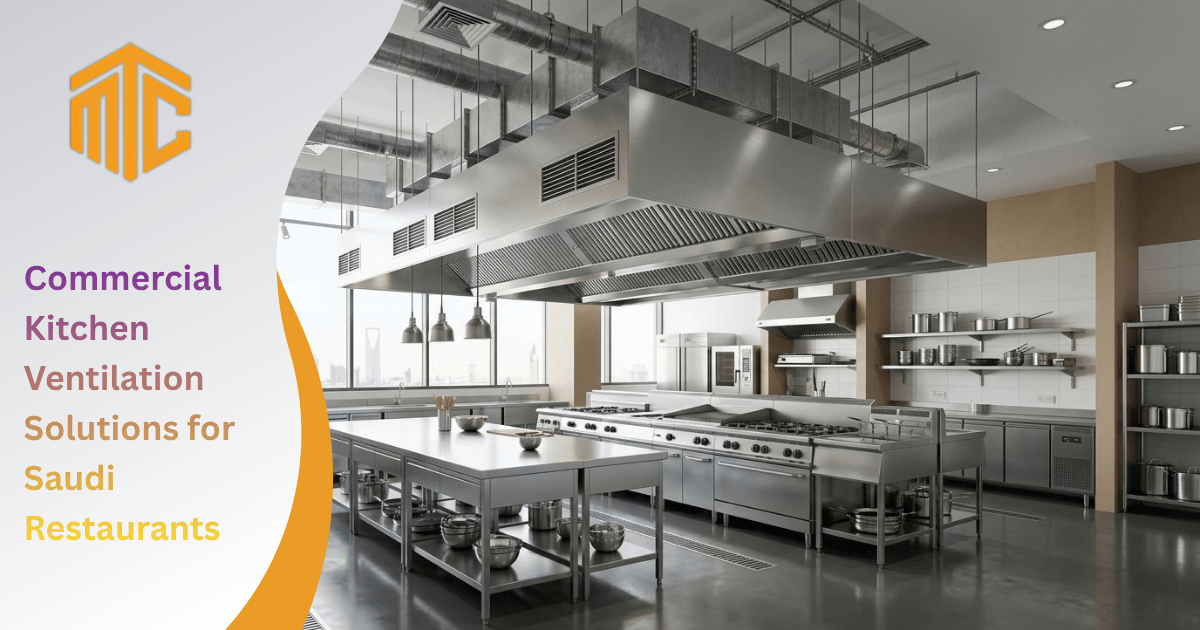
The heat, grease, and sand are always challenging your exhaust system with each shift. Below is the way to get the right kind of ventilation solution for your commercial kitchen in Saudi Arabia.
Saudi kitchens face three adversities altogether. First, heat comes in from the outside. Second, grease forms quickly because of plenty of frying. Third, sand comes in through each crack where it can. With such a combination, a poor exhaust system cannot stand long. With more and more restaurants being opened in cities such as Riyadh, Jeddah, and Dammam, kitchens require ventilation systems to meet their needs. Good ventilation proves to be a must. It saves the workers from smoke and heat. It prevents fires caused by grease. Also, it satisfies the inspectors who check the duct systems thoroughly. Below are some effective kitchen ventilation solutions to be followed.
UV-C Assisted Grease Exhaust Hoods
Grease hoods perform additional workload in Saudi kitchens. Grease hoods are used for smoke absorption in kitchens. Standard grease hoods can only capture smoke but allow the buildup of grease. UV-C hoods are enhanced with ultraviolet lamps inside the hood. The function of the lamp is to break down grease particles before they enter the duct. As a result, there won’t be much residue, which reduces fire hazards because grease build-up creates trouble for fire occurrence. Separate double shifts during Ramadan allow owners to benefit from grease hoods even more. Using UV-C grease hoods with a stainless baffle filter makes it even more beneficial.
Make-Up Air Systems Built for Desert Heat
The exhaust fan has to pull air from somewhere, and without a make-up air unit, the indoor air comes from outside through cracks and doors. In Riyadh, during the summer season, the outdoor air turns hot during noon. A make-up air unit pulls air from outside and cools it before sending it to the cooking line. This ensures that pressure is balanced and that the kitchen is comfortable during operating hours. The chefs get to cook and serve more food efficiently when the breathing conditions of the kitchen are optimized.
Fire Suppression Integrated Ventilation
Before anybody could realize that there is smoke caused by grease fires, the fire would have traveled through the duct systems. Fire suppression systems that are built-in typically connect directly to the exhaust hood and, when it detects heat, it shuts down the fans and also activates the wet chemical agent. There are many fire codes in Saudi Arabia that mandate the integration of fire suppression systems for kitchens where open flames are used. A stand-alone fire extinguisher is not sufficient for fires in the hood because the complete unit halts gas supply and stops the fuel from moving further. Chains communicating their many chains in Jeddah and Khobar are now taking fire suppression as an essential part of their setup.
Ductwork Design That Fights Grease Buildup
Grease is collected at every elbow of long, twisted duct runs. Food courts in Saudi Arabian shopping centers necessitate the use of ducts in cramped ceiling spaces, causing them to have a number of sharp turns where grease can easily get stuck. Good duct construction uses short, straight ducts with welded seams instead of screws and makes sure they slope slightly toward accessible facilities. Access panels located every few meters allow the staff to check the grease levels without dismantling the whole duct. Bad duct construction is one of the main reasons kitchens do not pass fire risk inspections even though the hood looks great.
Variable Frequency Drive Exhaust Fans
The cooking load is variable throughout the day from 10 am to 9 pm. The shawarma business is light early in the morning but explodes during the evening. Traditional exhaust fans run the fan all the time regardless of the cooking load. VFD motors operate more softly at night while showing energy savings of sometimes over 30 percent compared to conventional fans. The changes in prices for electricity in Saudi Arabia make the difference between traditional fans and VFD technology more apparent on electricity bills each month.
Odor and Smoke Control With Carbon Filtration
Authorized common kitchens in Saudi Arabian cities and mixed-use towers do not permit the exhaust of food odors directly into the outside air close to entrances and balconies. Air that leaves the building passes through carbon filtration phases for the removal of smelly substances. This is very critical in the case of very grill-heavy concepts such as mishkak or shawarma, the charcoal odor of which is very persistent. As a result, property managers are often requesting proof of odor control before they are ready to rent kitchens in new buildings in Riyadh. The filters need regular replacement; therefore, the issue has to be included in maintenance contracts since the very beginning of their signing to avoid being surprised when tenants complain about smelling their neighbors’ odor.
Heat Recovery Ventilators for Energy Efficiency
Wasting conditioned warm air from kitchens is equivalent to throwing away energy which has already been paid for. Heat recovery systems allow us to save warm exhaust air and utilize it for pre-treating incoming air. The technology became popular among large restaurant chains, which are only now trying to adopt it in line with Saudi Arabia’s energy efficiency Vision 2030 building code initiatives. Although installation work requires longer payback periods than in the case of less complicated installations, the projects result in real savings after several years of operation, even for facilities operating sixteen hours a day.
Smart IoT Monitoring for Multi-Branch Chains
Restaurant chains working all over Saudi Arabia won’t be able to check every hood from time to time. IoT gadgets installed in ventilation systems measure grease accumulation, the efficiency of the fan, and the temperature of the airflow in real time. The manager of the establishment receives notifications prior to a clogged filter becoming a fire risk or leading to failed inspections. It matters enormously for franchise operators who are running ten or even more establishments from a single headquarters in Riyadh. Data logs also help prove compliance in case of DoS audits because they show when the equipment was last serviced. Multi-tech HVAC teams are now offering conditional contracts that include this monitoring.
Sand and Dust Pre-Filtration
The air in deserts contains tiny particles of sand that no common filter can ever catch or hold. Air intake systems on rooftops in Jeddah and Dammam get clogged way before the expectations of the manufacturers. Extra stages of filtering the air before it is passed through the main filter are needed since they trap and retain most of the coarser sand particles from the future air supply. This simple installation can prolong the service of both the make-up ventilation systems and exhaust fan units for a long time. Coastal kitchens also experience problems with the salty air, but it can also be solved with the help of pre-filters. Not applying this simple rule is one of the most common reasons why the cooling systems in kitchens of Saudi Arabia fail way earlier than expected.
Scheduled Grease Duct Cleaning and Certification
Cleaning is necessary for every sophisticated piece of equipment in any system to be reliable and effective. NFPA 96 standards explicated in Saudi fire codes recommend cleaning every month for restaurants with significant cooking use and quarterly for restaurants with less cooking volume. All cleanup processes must be documented by professionals using photographs and certificates. Kitchen fire insurance claims are likely to be rejected if the cleaning records do not exist or are incomplete. Having an HVAC contractor that can take care of hoods, ducts, and fans makes it possible to avoid shifting the blame to other contractors when any failure occurs.
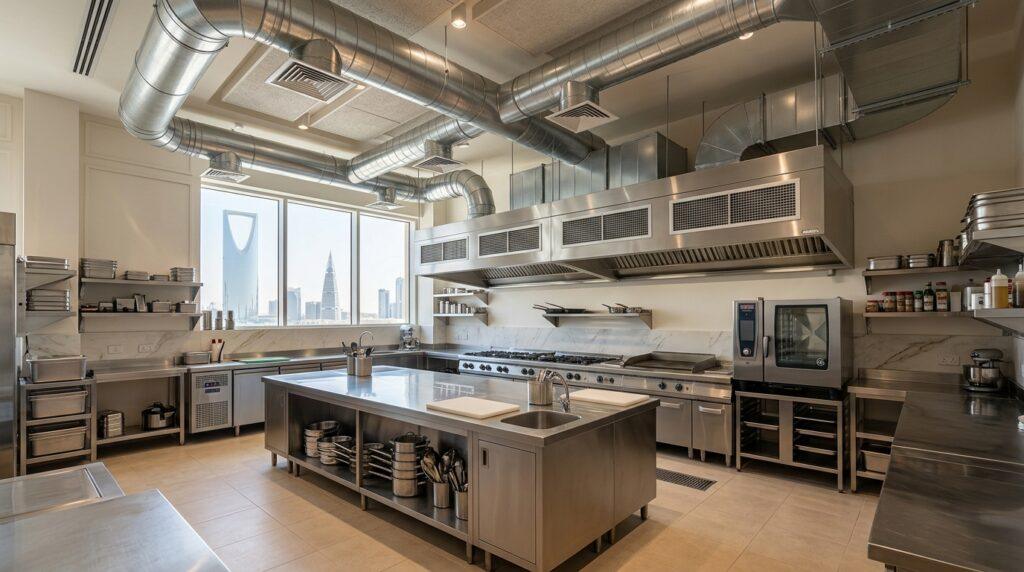
Bonus: Ventilation Trends Worth Watching
Demand-Control Ventilation is going from a luxury to a standard, using optical sensors over cooklines to throttle fans in real time instead of relying on fixed schedules. Riyadh rooftop MUA units are getting solar-powered tempering, easing grid load during peak sun hours. Now, the same centralized building management systems that gather data on chillers and lighting also gather data on kitchen exhaust. None of these replace the fundamentals listed above. They just make good systems smarter as time goes by.
Get Your Kitchen Assessed by MTC
Every Saudi kitchen has its own blend of heat, grease, and dust. MTC HVAC team inspects hoods, ducts, make-up air, and fire suppression simultaneously, on one visit, and gives you a straight report on what needs fixing now versus later. No guessing, no dividing responsibility between separate contractors. Whether you run a single shawarma counter or a twelve-branch chain covering Riyadh, Jeddah, and Dammam, book a site visit and get a real solution for your kitchen ventilation health. MTC offers the best ventilation solutions built for restaurant operators and commercial kitchens in Saudi Arabia.
Book a Ventilation Assessment
Frequently Asked Questions
How often should Saudi restaurant kitchens clean grease ducts?
High-volume grills and fryers need monthly cleaning. Lighter kitchens with less frying can often stretch to quarterly. Cooking volume, not calendar habit, should set the schedule.
Is make-up air really necessary in a small kitchen?
Yes. Even small kitchens pull replacement air from somewhere. Without a tempered supply, that air enters a hot, unfiltered desert draft through doors and gaps, straining staff and equipment alike.
Do Saudi Civil Defense codes require fire suppression in hoods?
Most kitchens with open-flame or high-heat cooking now need integrated fire suppression tied to the exhaust hood, not just a standalone extinguisher on the wall nearby.
What is a multi-tech HVAC service provider?
One team that handles hoods, ductwork, fans, make-up air, and fire suppression together. It removes the finger-pointing that happens when several separate contractors each service one part alone.