
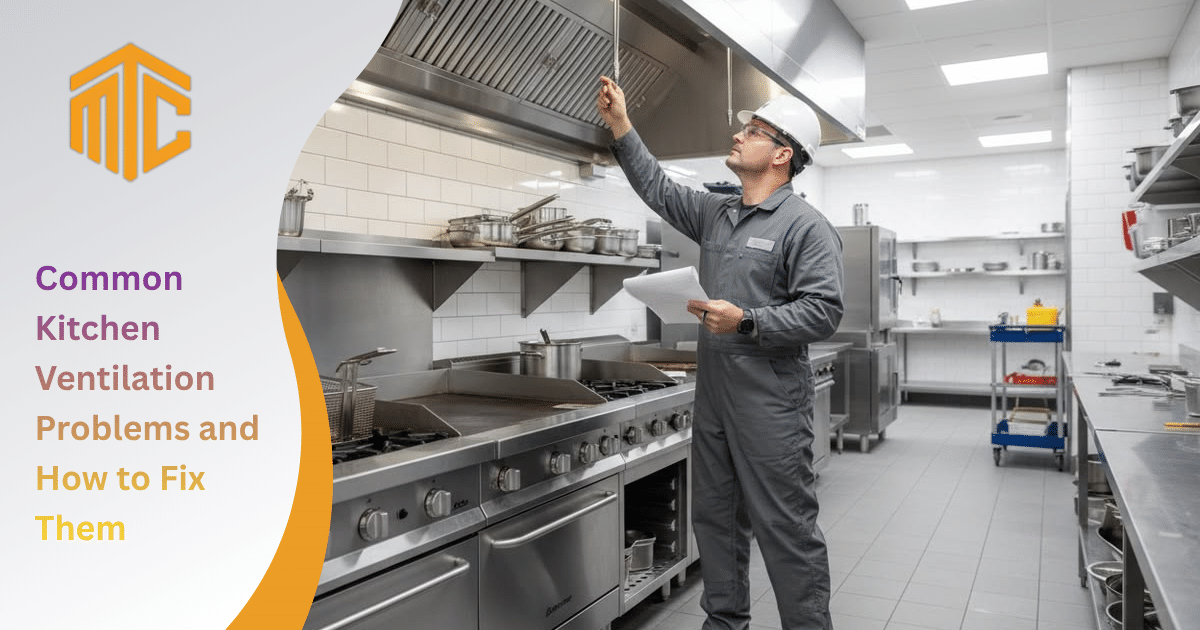
Ventilation in kitchens keeps the environment safe, neat, and comfortable. If ventilation does not work correctly, smoke can linger in the kitchen. Furthermore, grease can accumulate quickly, making the kitchen uncomfortable. Although many commercial kitchens in Saudi Arabia have these problems, kitchen owners do not know the root of the problem. Fortunately, each problem has its solution. While some problems require improved equipment, others can be solved through better engineering techniques. The article presents some common kitchen ventilation problems, and all of them have effective solutions.
Weak Exhaust Airflow
Particularly, weak airflow is one of the most common problems. When the airflow is weak, smoke and steam remain in the air longer than they should. The problem happens because the exhaust fan does not have sufficient capacity for the cooking load in the kitchen. Eventually, the situation is worsened by the old duct system, which prevents proper airflow.
Solution
Start with proper calculation of the airflow according to the output of the cooking equipment and not just an estimate. The next step would be upgrading the exhaust fan by replacing it with one with a high output level that matches the load in the kitchen. Add a variable frequency drive to the motor of the equipment so that the speed is determined by the current cooking activity level.
Grease Buildup in the Hood and Ducts
Over the years, grease gets trapped in the duct system. When this happens, airflow takes a hit, and the existing fire hazard risk sets in. Making matters more alarming are ineffective grease filters that are either used incorrectly or simply old. When all of this is ignored, the grease can go very deep into the duct system.
Solution
Switch from mesh filters to baffle filters because they can capture the grease much better and are much easier to clean. Also, stick to a strict cleaning schedule based on the amount of cooking, not just user convenience. If you have a very busy kitchen, go for a UV-C grease reduction system. This will help break down grease vapors in the air before they start settling down.
Poor Make-Up Air Balance
The kitchen requires air circulation in order to replace the leaving air. If this is not achieved, doors may be difficult to operate. Exhaust fans may experience trouble in efficiently blowing out smoke. This occurs in the absence of make-up air systems or if they are undersized.
Solution
Proper make-up air systems must be installed to provide for exhaust air volume. If possible, it is better to choose tempered make-up air units. Such units will capture air of suitable temperature and keep the kitchen stable in temperature and humidity during the use of the exhaust system.
Excess Heat Buildup in the Kitchen
Commercial kitchens may generate lots of heat due to the usage of fryers and ovens. When it is impossible to cope with excessive heat, it may cause a decrease in employees’ productivity and satisfaction. Usually, the insufficiency of insulated ducts or small exhaust hoods leads to this problem.
Solution
A specially designed hood system must be installed with the right capture velocity. In this case, heat and vapor will be removed effectively. They pull hot exhaust air out while pre-conditioning incoming fresh air, keeping the kitchen cooler without forcing the AC system to work harder than it should.
Noisy Ventilation Systems
Noisy fans and rattling ducts are bothersome, indicating malfunctioning engineering or improper fan sizing. Static pressure associated with clogged outlets might be responsible for the noise, and ignoring it proves to be harmful.
Solution
Use a proper maintenance system to lessen the load on the motor. When fans are installed or replaced, those with a lower sound rating relative to the kitchen volume should be selected. Direct-drive fans are more efficient since they are quieter as compared to belt-driven fans, especially when vibration isolators are used at the mounting points.
Inconsistent Temperature in Kitchen
While some parts of the kitchen seem to be alright, others remain hot and sticky. This is commonly due to improper air distribution throughout the space. This is largely caused by improper duct design in the original construction work when the kitchen was built.
Solution
Install a zoned ventilation system for different parts of the kitchen to draw the required amount of air according to the cooking loads. For new constructions and big renovations, computational airflow modeling should be used to eliminate any chances of uneven airflow before the actual construction is started.
Frequent Filter Clogging
High-volume kitchens have filters that quickly clog, which reduces airflow and increases fire hazards. If the cooking method and the filter type are mismatched, filters will clog faster. For example, heavy frying needs better filtration than light sautéing, and the use of an inappropriate filter means faster clogging.
Solution
Use high-efficiency baffle filters designed for heavy grease cooking. Make the filter type suitable for the actual cooking method, not just the routine. Install filter monitoring sensors that help to inform staff when cleaning needs to be done rather than using the pre-scheduled time.
Outdated Control Systems
Many kitchens today still use simple on-off switches for ventilation, which wastes energy and does not give any control over performance. This means that there is no difference in air movement regardless of the kitchen traffic.
Solution
Install a smart ventilation control system. It uses sensors to understand when food is being prepared and automatically changes fan speed to reduce energy costs when traffic is low and increase airflow when cooking activity is high. Integrate the smart system with the building management platform to enable remote monitoring that helps to eliminate problems on time.
Ventilation problems rarely fix themselves. They need the right equipment, correct sizing, and proper engineering from the start. MTC brings all three together. Our team handles ventilation and HVAC services with a focus on real performance, not just quick patches. Whether you are dealing with weak airflow, grease buildup, or outdated controls, MTC can assess your commercial kitchen in Saudi Arabia and design a system that actually works and is fit for your restaurant. Reach out to MTC today and get your kitchen ventilation running the way it should.
Frequently Asked Questions
How often should kitchen exhaust hoods be cleaned?
Most commercial kitchens need hood cleaning every one to three months, depending on cooking volume.
Why does my kitchen still feel hot even with the exhaust fan running?
Your fan may be undersized, or make-up air isn’t balanced correctly with the exhaust system.
Can old ductwork really affect kitchen ventilation performance?
Yes. Old, narrow, or grease-clogged ducts reduce airflow significantly, even with a strong fan.
Is upgrading to smart ventilation controls worth the cost?
Yes. Smart controls cut energy waste and improve airflow response, often paying for themselves over time.