
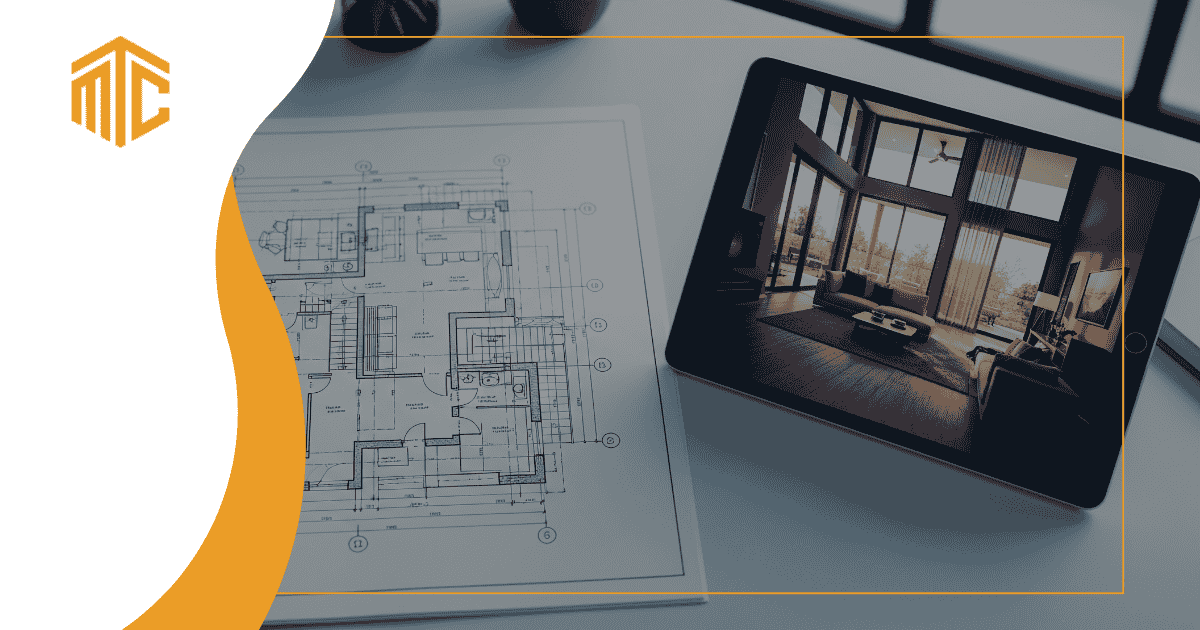
Every modern city depends on architectural engineering to shape its building structure. It focuses on creativity, technology, and sustainability. Today’s architectural engineering is becoming more complex because of fast urban growth in our changing world. By understanding these changes, developers, engineers, and city planners can better plan for future resilient infrastructure, a goal that MTC follows. This blog looks at the key challenges and innovations in the field, focusing on performance, technology use, and sustainable design practices.
Engineering is no longer a craftsmanship but a technology. Early designs were hand drawn. Now, projects are managed and coordinated more efficiently with BIM (Building Information Modeling), and the use of AI and IoT. Rapid population growth has created the need for smarter and stronger infrastructure. Green materials, renewable energy systems, and passive design are now used by architects and engineers. The industry is transforming, and new technologies and environmentally friendly approaches are driving the future of innovation.
Significant Challenges in Modern Architectural Engineering
Sustainability and Environmental Impact
The industry has its entire focus on the carbon-neutral and environmental-friendly designs as well as LEED finishes. The solar facades, green roofs and wind systems are few major examples of renewable energy sources. The major concern is the relationship between economic feasibility and environmental accountability. Recycled steel and low-emission concrete are innovative materials which are used to construct sustainable yet cost-effective buildings.
Technological Complexity
The AI-based design software, BIM and AR/VR visualization help in increasing accuracy of the project and collaboration. However, such complex systems are not difficult to perform if you are able to work together across disciplines. Professional training is one of the major challenges among professionals. The solution to these problems is possible in establishing industry-academic partnerships, regular certification programs, and training of digital practices.
Limitations of Urban Spaces
There has been an on-going problem of storage of urban land and the presence of strict zoning laws. In such a scenario, an engineer should utilize the available space. One key strategy is using the vertical designs in construction.
Budget Constraints and Cost Overruns
Most of the building projects are facing issues of inflation, shortage of materials and sudden delays that result in overruns. In such cases, correct budgeting and risk management are important. Cost modelling and predictive analytics of BIM help to detect the financial risks at an early stage. You can also use the tools transparency, procurement efficiency, and deliver the project within limited time limits.
Safety and Regulatory Compliance
There are strict safety and fire standards that engineers must follow. The issue of updating old structures is a great challenge for some architects. Advanced materials real-time monitoring systems increase the safety of the buildings. Smart sensors help to cater with predictive maintenance. This provides long-term structural stability and follows the national and international standards of construction.
Young Talent and Skills Gap
The profession of engineering is faced with an old population of engineers and little new professionals. The possible solutions are incorporation of robotics and automation to handle the shortage of labour and encouragement of STEM education. The modern training programs and the affiliation to industry play a crucial role in recruiting and preparing new engineers.
Cutting-Edge Solutions Transforming Architectural Engineering
Building Information Modeling
BIM helps with 3D visuals and real-time coordination between project teams. It helps to increase the accuracy of designs, reduce construction mistakes, and improve communication between stakeholders. BIM is a foundation of an effective, and transparent approach to engineering. It helps with smooth planning, estimating expenses, and managing the lifecycle.
Sustainable Building Material
Bamboo composites and biophilic materials are few of the materials that are transforming the sustainability of constructions. These materials are also durable, emit less carbon, and they also perform better about energy. Using greener options, architects and engineers can help to incorporate the concept of a circular economy and ensure the harmony between structures and nature ecosystems.
Intelligent Infrastructure and IoT Incorporation
The IoT systems help to monitor the use of energy, its temperature, and safety levels, constantly. Smart infrastructure improves the performance of the building by adjusting it automatically and predicting maintenance. It also handles intelligent bridges, adaptive lights, sensor-based ventilation systems, and so on. This improves the performance, safety, and environmental responsiveness in the architectural design.
Prefabricated Construction Modular Construction
Prefabrication reduces construction time, waste and time. Modules that are manufactured in factories are of uniform quality and can be assembled on-site with ease. Examples are modular hospitals and residential towers constructed in a few weeks. This shows how such a model encourages sustainability, scalability, and dynamics to fluctuating urban housing and infrastructure demands.
Intelligence and Automation
AI design helps to reduce the structural design, choice of materials, and project timelines. Automation improves accuracy in both the modeling and on-site implementation. Predictive analytics are used to identify potentially stressful areas in construction before the commencement of a construction project, reduces risk and improves safety. All these technologies help in increasing performance, innovation and accuracy in architectural engineering processes.
Highly-developed Simulation Tools
AR and VR technologies have the advantages of being strategic in giving the idea of the design that allows stakeholders to try out the buildings before constructing them. Digital twins are also capable of doing so after completion, in terms of monitoring performance and maintenance planning. The combination of these technologies allows for a better visualization, reducing the number of errors and supporting data-driven decision making in the lifecycle of a building.
Sustainability Urban Planning
Modern city planning focuses on ecological unity, effective transport, and the well-being of the community. Sustainable cities are made up of green areas, renewable energy stations and communal areas. The example of the UAE-based Masdar City shows that the principles of smart design can integrate both environmental sustainability and technological progress of urban ecosystems in the future.
Future Trends in Architectural Engineering Beyond 2025
The profession of architectural engineering is approaching a smart, sustainable and dynamic age. The AI-based design will process behavioural data and the surrounding environment to predict energy consumption and spatial arrangements. 3D printing will also allow creating structural elements in a short time, reducing waste and transportation expenses. It will be dominated by net-zero buildings that will produce excess renewable energy.
Resilient design philosophy will focus on flexibility and permanency in the face of climatic and social changes. The materials will be reusable and recyclable, which will be promoted through circular construction, creating a closed-loop economy.
Cities of the future will be characterized by intelligent infrastructure, green transportation and humanized buildings. There will be a combination of digital solutions and environmental sustainability to build a sustainable, habitable, and sustainable built environment.
Conclusion
Modern architectural engineering continues to evolve amid challenges like sustainability and urban space management. Yet, advancements in AI, IoT, and eco-friendly materials are revolutionizing design and construction, making cities smarter and more resilient. At the forefront of this transformation, MTC exemplifies how innovation and sustainability can shape enduring architectural legacies for generations to come.
Frequently Asked Questions
1. What are the biggest challenges in modern architectural engineering?
Managing sustainability, urban space, cost, safety regulations, and adapting to fast-changing technology remain significant modern engineering challenges.
2. How does technology help in architectural engineering?
Technology enhances design precision, enables real-time collaboration, reduces errors, and improves sustainability through AI, BIM, and digital simulations.
3. What is the role of BIM in architecture?
BIM allows 3D visualization, cost estimation, and efficient project coordination, improving accuracy and reducing time delays significantly.
4. Why is sustainability important in construction projects?
Sustainability minimizes environmental damage, reduces long-term costs, conserves energy, and promotes healthier, eco-friendly living spaces for future generations.