
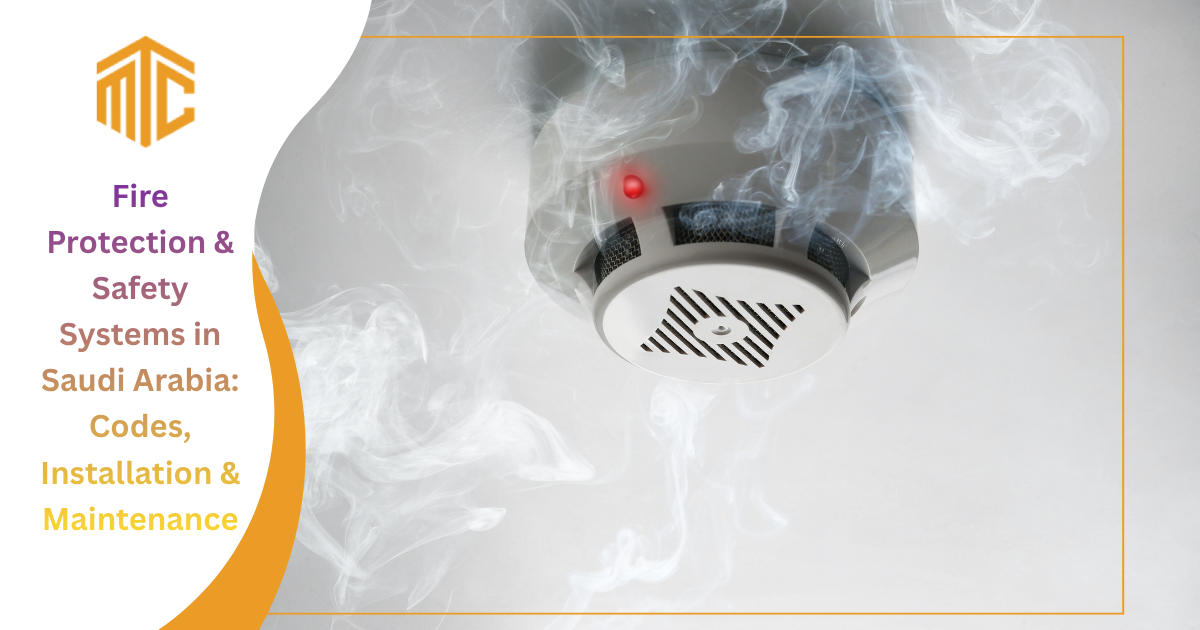
Fire protection is becoming more important in Saudi Arabia as cities, industries, and infrastructure continue to grow. Commercial, industrial, residential, healthcare, and hospitality facilities all face different fire risks that require proper protection. Compliant fire protection systems help save lives, protect valuable assets, and ensure business continuity. With Saudi Vision 2030 strengthening building safety standards, MTC provides reliable fire protection and safety solutions across the Kingdom.
Fire Protection and Safety Systems protect life, property, and buildings from the threat of fire. These systems are used in homes, offices, factories, shopping malls, hospitals, and other places in Saudi Arabia. Typical fire protection systems generally consist of smoke detectors, fire alarms, sprinklers, and fire extinguishers, emergency lighting, and an evacuation plan.
These systems are designed to be in harmony to detect fire, raise alarms to warn people, and control fires. Correct assembly and maintenance are essential to achieve good performance. Compliance with fire safety needs also contributes to risk reduction, safety enhancement and compliance with local regulations and building standards.
Fire Safety Regulations and Codes in Saudi Arabia
Saudi Arabia has very strict fire safety laws that ensure the safety of life and property. The building owner/occupant is responsible for complying with approved fire safety building codes when constructing and then operating a building. The regulations pertain to fire alarms, sprinkler systems, fire exits, firefighting equipment, and evacuation plans.
It is important that fire protection systems are installed by qualified professionals and inspected regularly to ensure compliance. An inspection could be undertaken to ensure that safety requirements are being met. Other facets of compliance include proper documentation, staff training, and maintenance records. These rules help to minimize the risk of fire, better prepare for emergencies, and provide a safer environment for all.
The Fire Protection System Installation Process
Assessment of Risk and Site
Installation starts with a comprehensive site assessment. The building is inspected by fire protection experts to identify fire-related risks and to assess the safety needs. This information is used to assess the best fire protection options for the facility and the individual risk.
Design and Plan the System
After the assessment, engineers develop a fire protection system design. Alarms, detectors, sprinklers, and emergency equipment are included in the plan. The design is developed based on the building requirements and fire safety codes in the local area for effective protection.
Selection and Procurement of Equipment
The next step is to choose fire protection equipment that is of good quality. Smoke detectors, control panels, sprinkler heads, and fire extinguishers are selected according to the approved design. Dependable equipment ensures better equipment performance and prolonged safety.
Installation and System Integration
All FPC elements are installed by qualified technicians following an approved plan. The system is wired and wired into proper communication with alarms, detectors, and suppression systems. Accurate detection and rapid emergency response rely on proper installation.
Testing, Inspection and Commissioning
Once installation is complete, the entire system is tested and inspected. Technicians test all devices for proper functioning and safety. Final commissioning ensures that the system will be in use and is capable of protecting against fire.
Fire Protection System Maintenance Requirements
Regular System Inspections
The regular inspection process enables identification of defective, damaged, and obsolete fire protection equipment. Alarms, detectors, sprinklers, and control panels are checked by qualified technicians to ensure they are functioning properly. Regular checks minimize the risk of system failure and keep systems compliant with fire safety regulations.
Fire Alarm Testing
The fire alarm system should be checked regularly to ensure that the warning signals are working. Testing makes sure that an alarm will alert occupants promptly in case of an emergency. Faulty devices should be fixed immediately for reliable protection in the entire facility.
Sprinkler System Maintenance
Sprinkler systems need maintenance to function properly in case of fire. Leaks, blockages, or damage are checked by technicians in the pipes, valves, and sprinkler heads. Proper maintenance helps guarantee fast water distribution when fire suppression is needed.
Emergency Equipment Checks
Fire extinguishers, emergency lighting, and exit signs should be checked regularly as emergency equipment. These inspections help maintain the availability of equipment and ensure it is in good working order. Emergency devices are maintained, and keep the evacuation process safe and enhance emergency response during a fire incident.
Documentation and Staff Training
It is important to document maintenance activities for the future and for regulatory compliance. Regular fire safety training for staff should also be provided. Organizations have trained staff and updated their records to be able to respond quickly to emergencies and continue to have a good safety culture.
Common Fire Safety Challenges in Saudi Facilities
There are lots of fire safety issues in many facilities in Saudi Arabia. Fire hazards can arise from high temperatures, large size of industrial operations, and complicated building structures. Regular maintenance, employee training, or adherence to fire safety requirements can pose challenges in some organizations.
Safety issues also may include blocked emergency exits, out-of-date equipment, and inappropriate storage of flammable materials. Existing fire protection may need to be upgraded in the event of a rapid expansion of facilities. Sometimes, not knowing what to do to prevent fires can lead to a higher risk of fire. Solving these problems can help make things safer, less risky, and keep people and property safe.
Emerging Trends in Fire Protection & Safety Systems
The future of fire protection and safety systems is all about smarter, faster, and more connected technologies. Artificial Intelligence and IoT sensors are enhancing the ability to detect smoke, heat, and gas leaks, thus allowing predictive warnings before a fire has the chance to grow. Wired fire alarm systems are being phased out in favor of wireless, as it is easier to install and is more scalable.
Water mist and clean agents are being used now and are becoming more popular in sensitive areas such as data centers for advanced suppression. Automated responses, such as evacuation instructions and emergency communication, are improved through integration with building management systems. Fire monitoring and hazardous response are becoming an area of increased drone and robotics use to enhance safety and efficiency.
Conclusion
Fire protection systems are essential for safety in Saudi Arabia. Following Saudi codes and Civil Defense regulations helps reduce risks. Professional installation and regular maintenance keep systems effective. Integrated solutions protect people, assets, and operations. Partnering with MTC ensures reliable, compliant, future-ready fire protection systems.
Frequently Asked Questions
Is Civil Defense approval mandatory for fire protection systems?
Yes! Most commercial, industrial, healthcare, hospitality, and large residential facilities require Civil Defense approval before operation.
How often should fire protection systems be maintained?
Maintenance frequency depends on system type. Hence, monthly inspections, quarterly testing, and annual comprehensive servicing are generally recommended.
What is the difference between active and passive fire protection?
Active systems detect and suppress fires using alarms, sprinklers, and extinguishers. Passive systems help contain fire through fire-rated walls, doors, and compartmentation.