
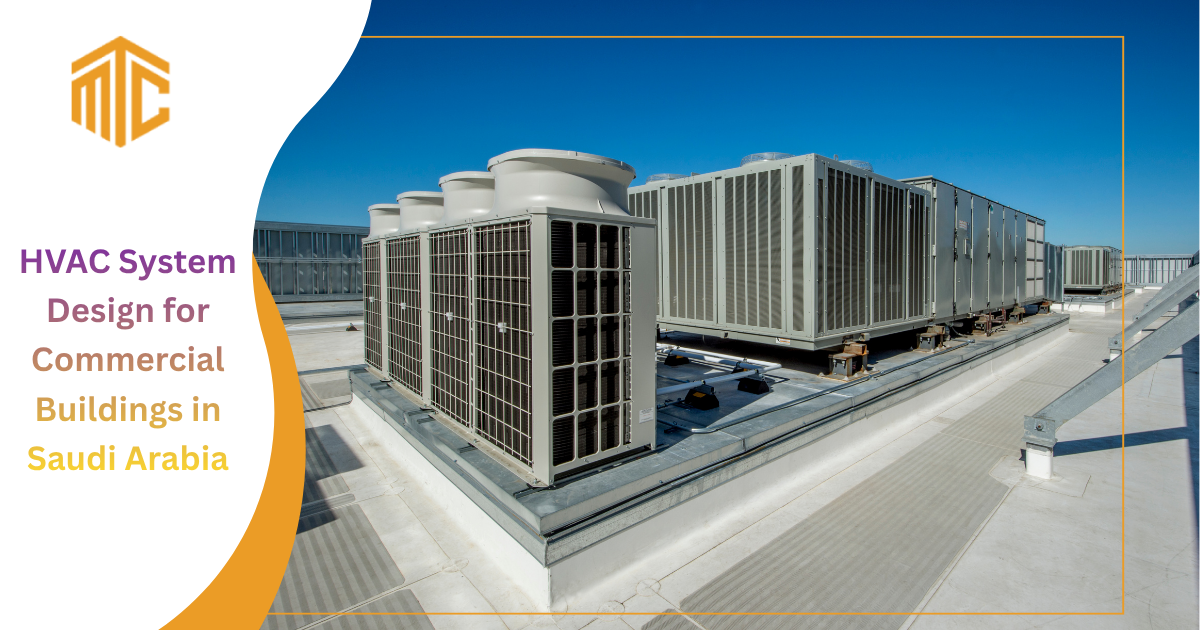
Saudi Arabia’s commercial infrastructure sector is growing rapidly, with new malls, hospitals, hotels, offices, data centers, and industrial facilities being developed across the Kingdom. HVAC system design plays a vital role in maintaining comfort, air quality, and energy efficiency in these buildings. Due to extreme temperatures and increasing energy demands, advanced HVAC design has become essential. MTC provides trusted HVAC engineering, installation, maintenance, and energy-efficient solutions across Saudi Arabia. This guide explains the importance of HVAC system design for commercial buildings in Saudi Arabia.
The HVAC system design in Saudi Arabia is all about the process of arranging the heating, ventilation, and air conditioning systems for commercial buildings. When it comes to design, it is important to create an environment that is comfortable, cool, and healthy for employees and visitors. It also regulates humidity, enhances air quality, and decreases energy consumption.
The design of the overall system is based on the building dimensions, configuration, climate, and number of occupants. The placement of equipment, ductwork, and ventilation is also critical to the smooth operation. A properly designed system can help reduce operational expenses, boost energy efficiency, and create a more comfortable workplace year-round for commercial buildings.
The Biggest HVAC system designChallenges in Saudi Arabia
Extreme High Temperatures
Most of the year is extremely hot in Saudi Arabia. To achieve comfortable indoor conditions, these systems will have to run longer and harder. The HVAC system design uses more energy, leading to equipment wear and maintenance and repair expenses, particularly in summer and at busy times in commercial buildings.
High Energy Consumption
In Saudi Arabia, air conditioners are essential for commercial buildings on a daily basis. Continuous cooling leads to higher electricity consumption and higher operating costs. Energy cost reduction and maintaining comfortable indoor temperatures are problems for many businesses, particularly in large offices, shopping malls, hotels, and industrial plant buildings.
Dust and Sand Challenges
Saudi Arabia is a typical country where dusty conditions and sand particles occur. These conditions can complicate air filters, cause equipment damage, and reduce performance. HVAC system design require regular cleaning and maintenance to ensure proper operation. In buildings, the filtration of air can also impact the indoor air quality and comfort.
Control Humidity in Coastal Regions
Cities located close to coastal areas have high humidity levels, and this presents further HVAC challenges. Too much moisture can lead to discomfort, mold, and poor indoor air quality. To achieve healthy and comfortable inside environments for building occupants, HVAC systems need to be designed to perform as intended and control humidity properly.
The Impact of Poor HVAC system design on Commercial Buildings
In the commercial buildings, a lot of issues can be caused by the bad HVAC system design. Problems like uneven cooling and poor ventilation make it uncomfortable for employees and visitors. If the system is not installed correctly, it can use more energy and result in high electricity bills. This can also decrease indoor air quality and lead to health and productivity problems due to poor air flow. Sometimes, too much humidity can lead to mold growth and odors.
Additionally, the systems that are not designed correctly can experience frequent breakdowns and increased maintenance costs. An HVAC system design that is not planned and designed correctly can lead to a less efficient system and a loss of overall performance or value of the commercial building.
HVAC system design Solutions for Commercial Buildings in Saudi Arabia
Energy-Efficient HVAC Systems
Energy-efficient equipment allows commercial buildings to decrease their operating costs and electricity use. The modern systems have advanced technology, which gives quality cooling results while consuming less energy. In Saudi Arabia’s harsh climate, these energy-efficient solutions also contribute to sustainability objectives and enhance the reliability of the systems in the long run.
Smart Building Automation
Smart HVAC system design controls and automation systems can assist in real-time monitoring of temperature, airflow, and energy use. These systems will automatically adjust cooling, depending on the weather or on who is in or out of the building. Through building automation, the comfort is enhanced, energy is not wasted, and facility managers can better and more efficiently control performance.
Advanced Air Filtration Systems
With the presence of dust and sand particles in Saudi Arabia, quality air filtration systems are essential to protect the entire equipment. The correct filter can also increase indoor air quality by eliminating pollutants and allergens. Clean air systems promote well-being for staff, customers, and visitors in commercial buildings and workplaces.
Appropriate Insulation and Ventilation
Effective insulation minimizes the transfer of heat through the exterior and helps the HVAC system design to keep the interior at its target temperature. Inadequate ventilation can lead to a lack of fresh air movement and a poor indoor air quality. Insulation and ventilation together will save on energy, improve comfort for building occupants, and enhance the system performance throughout.
Routine Maintenance & System Inspection
Regular maintenance can detect issues before they escalate into major and costly concerns. You can get equipment to last longer and to work more efficiently by regularly checking on filters, ducts, and cooling equipment. Preventive maintenance can also minimize unplanned failures and provide consistent building performance in commercial buildings year-round.
Emerging Trends in Commercial HVAC system design in Saudi Arabia
In Saudi Arabia, commercial systems are becoming smarter, energy efficient, and eco-friendly. Today, many companies are opting for smart automation systems, allowing them to monitor and control cooling performance in real time. Energy conservation technologies like variable refrigerant flow systems and high-efficiency chillers are gaining in popularity.
Indoor air quality solutions are also coming into the spotlight as a result of the increased emphasis on creating a healthier workplace. Another new trend is the use of solar-powered systems, which can help businesses save on electricity bills and contribute to their sustainability initiatives. Furthermore, AI-driven predictive maintenance can aid facility managers in spotting issues early and enhancing the system’s reliability and long-term performance.
Conclusion
To sum up, commercial buildings in Saudi Arabia face many HVAC challenges, including extreme weather, high energy costs, indoor air quality issues, and strict compliance requirements. A well HVAC system design helps improve comfort, operational efficiency, sustainability, and long-term cost savings. MTC is a reliable HVAC engineering and contracting partner for commercial projects across the Kingdom.
Frequently Asked Questions
Which HVAC system is suitable for commercial buildings?
The most suitable system depends on building size and use. These can be either VRF systems or chilled water systems, central air conditioning systems, or rooftop units.
How does an HVAC system help to reduce energy consumption?
Energy consumption is reduced by energy-efficient equipment, smart controls, insulation, preventive maintenance, and design optimization.
How can you maintain commercial HVAC systems?
Preventative maintenance is necessary for systems twice a year to ensure that they are running efficiently and aren’t likely to fail.
What are some common HVAC design issues?
Signs include uneven cooling, high electric bills, inadequate air flow, frequent breakdowns, humidity problems, and occupant discomfort.